
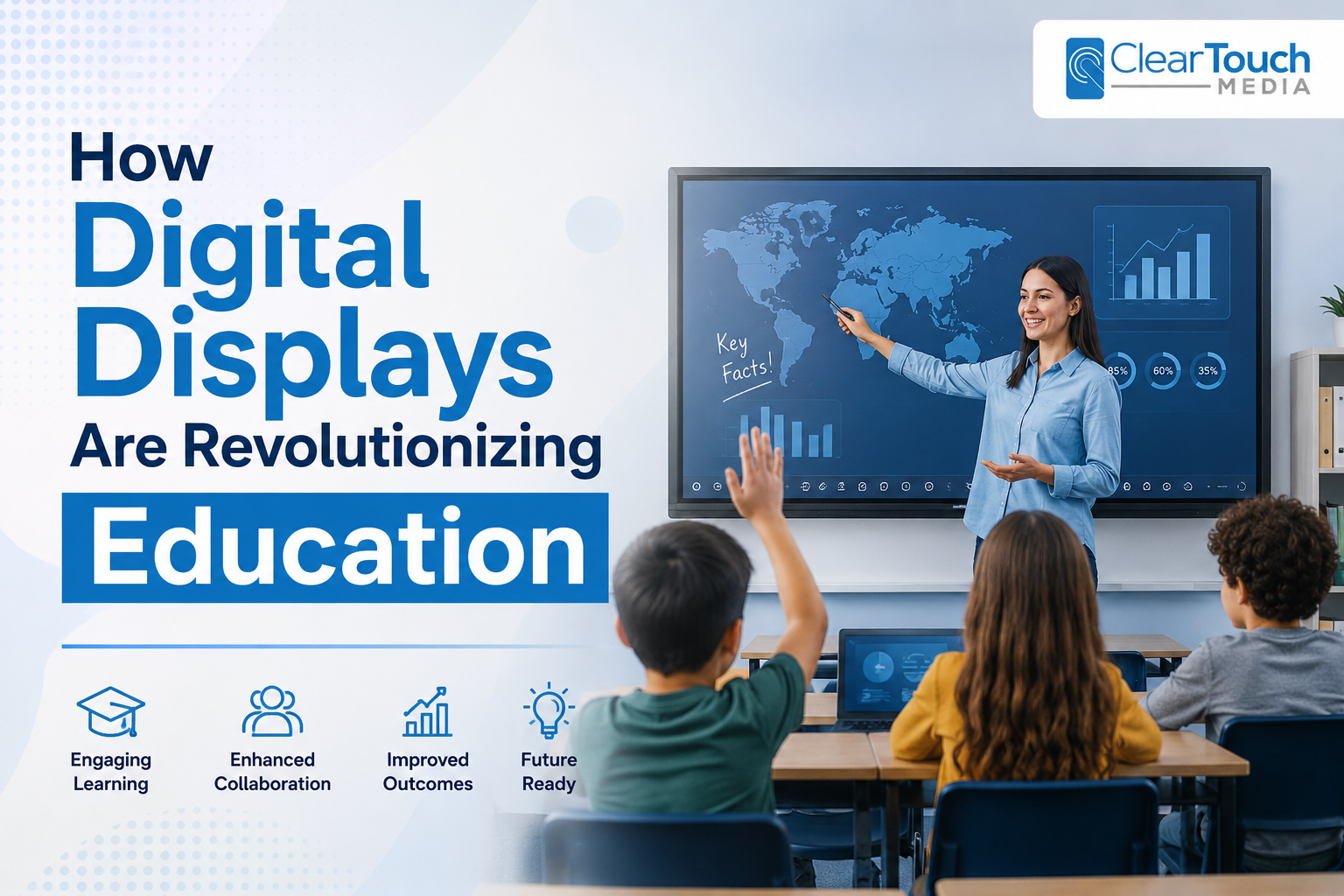
Education has completely changed over the past few years. Traditional classrooms that once depended only on blackboards, textbooks, and printed notes are now becoming smarter and more interactive. In 2026, technology plays a very important role in modern learning, and one of the biggest changes in classrooms is the use of digital displays. Digital displays are transforming the way you learn and the way teachers teach. From smart boards and interactive screens to digital projectors and touch screen panels, technologies are making classrooms more engaging and collaborative. Schools, colleges, and training institutes are increasingly using digital displays to improve communication and create better learning experiences.
What Are Digital Displays in Education?
Digital displays are electronic screens used for teaching, presentations, communication, and interactive learning.
These displays may include:
- Interactive smart boards
- LED display panels
- Touchscreen displays
- Digital whiteboards
- Interactive flat panels
- Projector screens
- Video walls
Why are schools moving towards digital classrooms?
Modeling students grow up using smartphones, tablets, computers, and digital media. Traditional teaching methods sometimes struggle to keep students fully engaged. Digital displays help bridge this gap by making learning more dynamic and technology-friendly. Schools are adopting digital classroom solutions because they offer better student engagement and interactive learning experiences. Digital learning environments are becoming especially important in smart schools and modern educational institutions
Digital Displays Support Hybrid and Online Learning
The growth of online education has increased the importance of digital classroom technology.
Digital displays help schools support:
- Online classes
- Hybrid learning models
- Virtual presentations
- Remote student participation
Interactive learning improves student engagement
One of the biggest advantages of digital displays is improved classroom interaction. Traditional teaching methods often involve one-way communication where teachers explain lessons while students listen passively. Digital displays make classrooms more participative, and students can interact with touch-screen boards and solve problems on screen. Interactive learning helps students stay focused and interested during lessons.
Future of Digital Displays in Education
Technology will continue to shape education in the coming years.
Future classrooms may include:
- AI-powered learning systems
- Augmented reality displays
- Virtual reality education
- Personalized digital learning
- Smart interactive classrooms
Digital displays will remain an important part of modern education because they improve engagement, accessibility, and learning quality.
Why Students Prefer Digital Learning Environments
Many students enjoy digital learning because it feels more interactive and modern compared to traditional classrooms.
Digital displays help students:
- Learn visually
- Participate actively
- Access information quickly
- Enjoy multimedia learning
- Develop digital skills
Digital displays help teachers teach more effectively
Digital technology also reduces the workload for teachers. Teachers can reuse saved lesson materials and also access digital teaching resources quickly. This helps teachers focus more on student interaction and learning quality instead of repetitive manual work.
So you need to know that digital displays are revolutionizing education by making classrooms smarter and more interactive. From interactive smartboards to touch-screen learning systems, these technologies are changing the way you learn and how students are taught. They improve visual learning, communication, and access to educational resources while also supporting online hybrid education models.
Also Read : How Customized Digital Signage Software reduces Operational Costs